
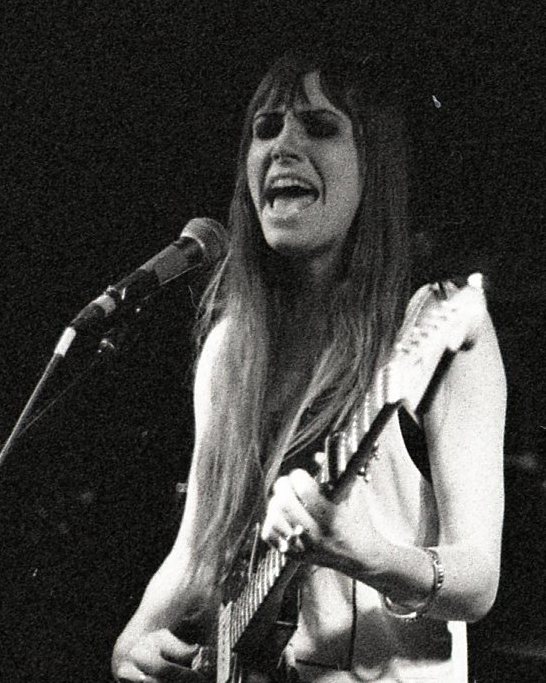
The appeal of Emma Ruth Rundle at low volume is surprisingly specific: the confidence to leave space between ideas. It belongs in conversations about atmospheric pop and songwriting, though the most convincing moments are the ones that feel too specific to be reduced to a tag. I am interested in whether the music keeps its character when the volume drops, because that is where supposedly relaxing music often reveals how little is actually going on.
Tempo alone never explains why something feels relaxed, so I pay attention to the internal pulse. I like the moments where the percussion feels measured rather than engineered for maximum impact. The result is a groove you can notice or ignore without the music collapsing either way. That is where Emma Ruth Rundle fits my idea of laidback music: not sleepy, but comfortable enough with repetition to let the listener settle inside it.
Sonically, I keep listening to the relationship between surface and depth. What stands out is melodic writing that still carries weight when the production is turned down and the room gets quiet. I value that sense of scale because quiet music becomes much more convincing when every sound seems to know why it is there. With Emma Ruth Rundle, the quieter details are often the ones I want to follow: the tail of a sound, the grain around a vocal, the small change that turns repetition into movement.
A useful kind of friction
For me, the most persuasive quality is a mood that feels intimate and cinematic. There is enough character in the mood to resist the anonymous smoothness that can plague curated relaxation playlists. The emotional pull of Emma Ruth Rundle comes from suggestion rather than explanation, at least in the moments I respond to most strongly.
The music is strongest when it avoids one familiar danger. There is a fine line between atmosphere and overproduction. The songs I return to are the ones where the production still lets the human voice carry some grain and uncertainty. When that balance is right, the quieter material feels intentional rather than merely subdued. I do not want Emma Ruth Rundle sanded down to fit an imaginary lounge. The interesting material is usually the material that retains some stubbornness.
The natural habitat, at least for me, is a grey afternoon with nowhere urgent to be. For curators, that versatility is useful because mood is rarely about finding ten tracks that all behave the same way. For me, Emma Ruth Rundle works best as part of a changing atmosphere rather than as a fixed definition of chillout.
For a site devoted to slower, more atmospheric listening, Emma Ruth Rundle earns a place by refusing to confuse calm with emptiness. I like music that changes a room subtly rather than announcing a lifestyle, and this does that. It can be companionable, immersive or quietly unsettling depending on what you bring to it. If the goal is a playlist that feels relaxed without becoming anonymous, Emma Ruth Rundle can provide exactly the kind of colour that keeps the sequence human.