
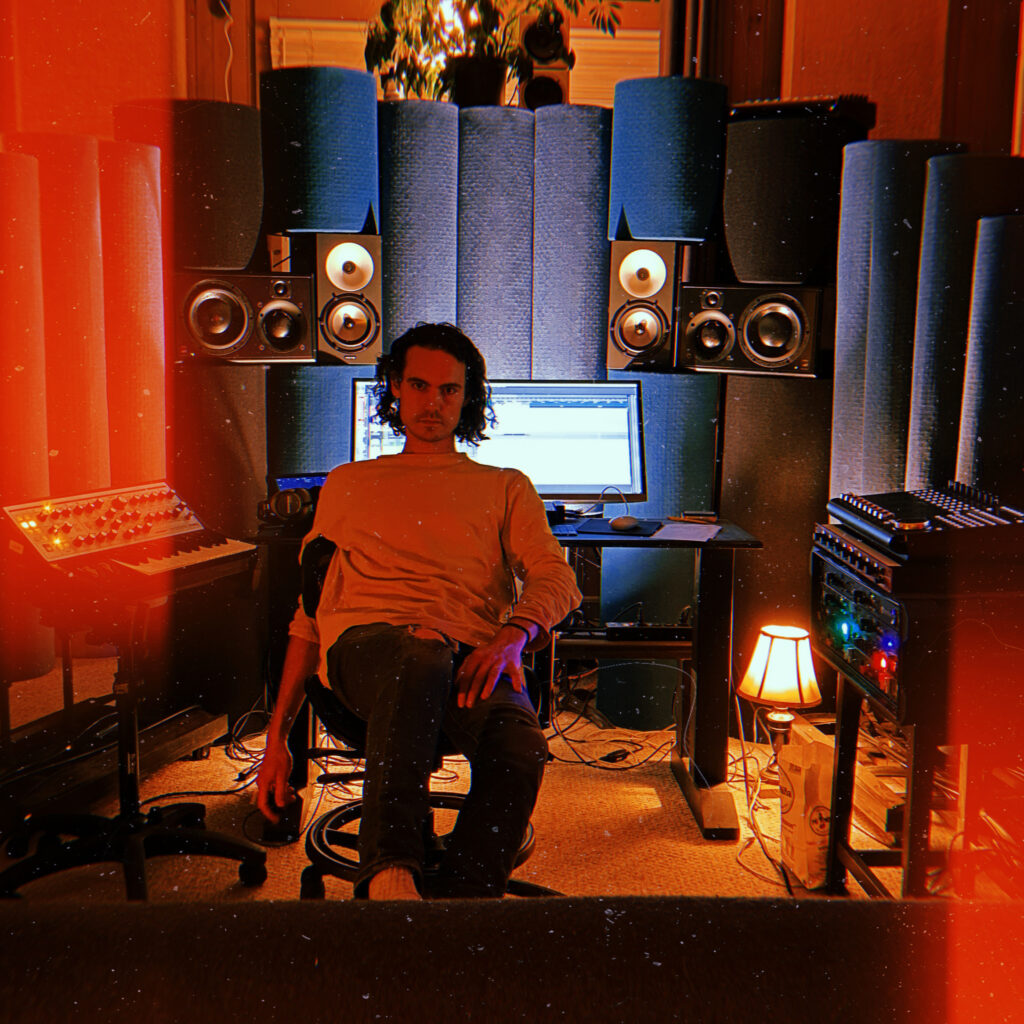
If a good chillout record should create space without surrendering personality, Hudson Freeman gives you plenty to work with. You can hear the connection to atmospheric pop and songwriting, although the attraction is really in how the elements are balanced. I am interested in whether the music keeps its character when the volume drops, because that is where supposedly relaxing music often reveals how little is actually going on.
Inside the arrangement
What survives a quiet playback is usually the best clue to an artist's real character. The palette often suggests songwriting first, then atmosphere: a useful balance of melody, texture and negative space. Nothing needs to compete for the foreground, and that restraint is a large part of the pleasure. What I appreciate in Hudson Freeman is the sense that space is being composed as actively as melody or rhythm.
Pacing is equally important. There is enough pulse to keep the song upright, but usually enough room for the emotional details to breathe. That is what lets the music move without making the listener feel pushed. I would rather hear Hudson Freeman hold a groove for a few extra bars than rush toward a payoff that the track does not need.
This is the kind of music I would reach for during a grey afternoon with nowhere urgent to be. Placed carefully in a playlist, the artist can act as a bridge between more ambient material and songs with a clearer vocal or rhythmic centre. That kind of contextual flexibility is one of the reasons I think Hudson Freeman belongs in conversations about contemporary laidback listening.
The emotional colour I take from the music is intimate and cinematic. That matters because relaxed music becomes forgettable when it removes all friction. I want a little ambiguity, a sense that the calm surface is holding something back. I like that Hudson Freeman can sound inviting without necessarily sounding safe. Relaxed listening is more memorable when there is still a shadow in the room.
Closing thoughts
I do have one reservation. A polished chorus can be beautiful, although I tend to prefer the quieter details around it. Those small transitions often reveal more character than the moments designed to land hardest. That tension is useful rather than fatal. It gives me something to argue with, and music worth returning to usually benefits from a little resistance. If anything, I would encourage a curator to keep the stranger or heavier side of Hudson Freeman in the mix. Too much smoothing-out defeats the reason the artist was interesting in the first place.
This is why I would keep Hudson Freeman in the CHILLSKY orbit. The sound can be gentle without becoming anonymous, and atmospheric without using atmosphere as a substitute for ideas. I will always take that over music that merely signals relaxation. I would file Hudson Freeman under music for unhurried attention, which is a much broader and more useful category than chillout alone.