
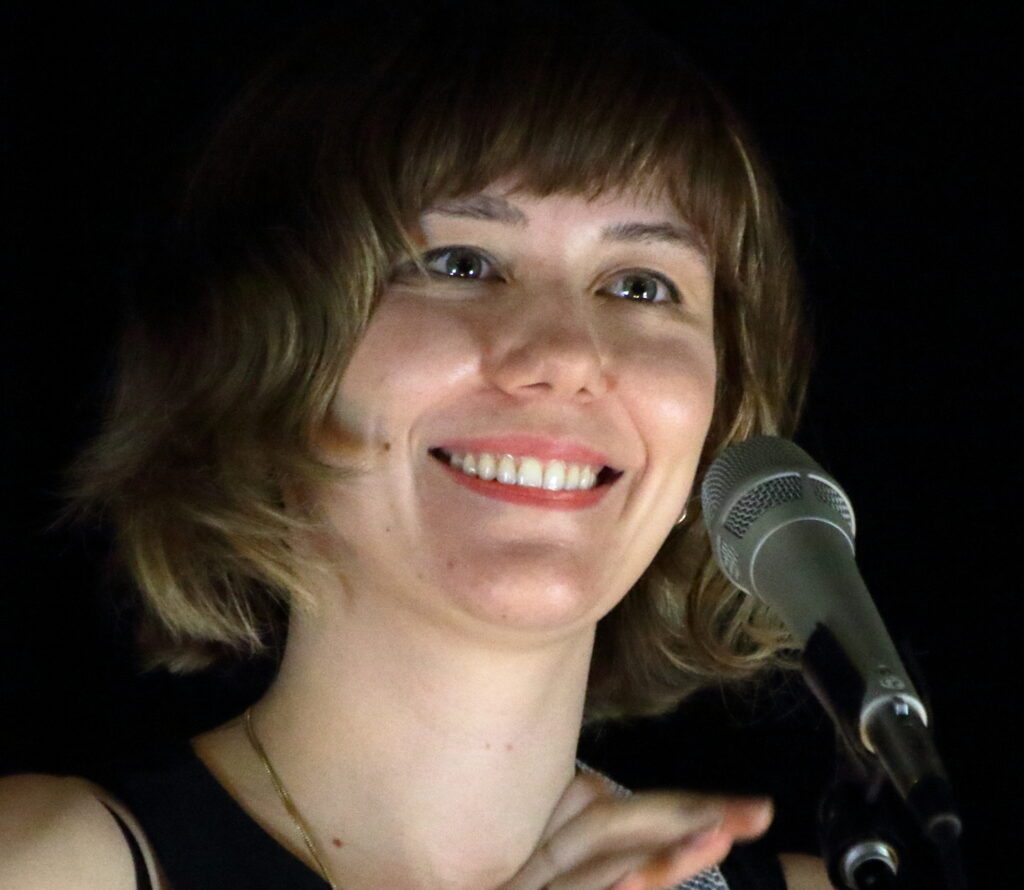
Some artists relax a room by becoming less noticeable. Molly Tuttle is more interesting because the music can do the opposite and still feel unhurried. In practical terms, this sits comfortably near roots music in a laidback setting, yet it keeps enough personality to avoid generic playlist smoothness. The test is whether I can drift away from the music and then return to it without feeling that the track has either vanished or started shouting for attention.
When the volume comes down
Sonically, I keep listening to the relationship between surface and depth. What stands out is acoustic strings, close harmony, woody resonance and percussion that sounds better for not being polished flat. Nothing needs to compete for the foreground, and that restraint is a large part of the pleasure. What I appreciate in Molly Tuttle is the sense that space is being composed as actively as melody or rhythm.
The music also understands something important about momentum. What works for me is the sense of tempo being played rather than programmed. For a chillout sequence, that kind of controlled motion is more valuable than simple slowness. That is where Molly Tuttle fits my idea of laidback music: not sleepy, but comfortable enough with repetition to let the listener settle inside it.
Emotionally, the temperature is unhurried, human and quietly vivid. That matters because relaxed music becomes forgettable when it removes all friction. I want a little ambiguity, a sense that the calm surface is holding something back. Molly Tuttle can make a quiet passage feel substantial simply by refusing to overstate it, and I have a lot of time for that kind of confidence.
As listening context goes, a long drive outside the city feels about right. For curators, that versatility is useful because mood is rarely about finding ten tracks that all behave the same way. For me, Molly Tuttle works best as part of a changing atmosphere rather than as a fixed definition of chillout.
Where it belongs
I do have one reservation. Roots music can be romanticised too easily. I am more interested in texture and character than in some imagined idea of authenticity, and the strongest moments are the ones that sound lived-in rather than carefully rustic. The imperfections are often where the personality lives, especially in music designed to operate below the level of spectacle. If anything, I would encourage a curator to keep the stranger or heavier side of Molly Tuttle in the mix. Too much smoothing-out defeats the reason the artist was interesting in the first place.
This is why I would keep Molly Tuttle in the CHILLSKY orbit. For me, the strongest downtempo listening is not about escape from feeling. It is about creating enough room to notice feeling, and this artist repeatedly points in that direction. Molly Tuttle reminds me that laidback listening is really about the relationship between space, pacing and personality.