
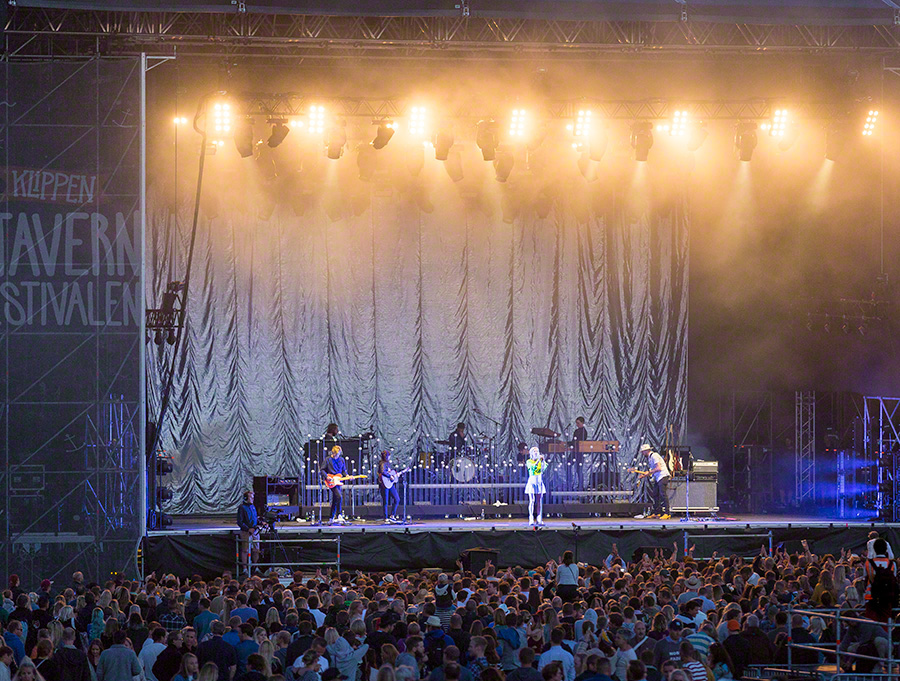
There is a difference between calm music and passive music, and Monica Heldal often lands on the more interesting side of that divide. The broader language is roots music in a laidback setting, but the label is less useful than the way the sound handles proportion. I am interested in whether the music keeps its character when the volume drops, because that is where supposedly relaxing music often reveals how little is actually going on.
Then there is the question of rhythm. The pulse has a natural swing that can relax a playlist without draining it of movement. That is what lets the music move without making the listener feel pushed. For Monica Heldal, that sense of time is crucial because it lets the music feel deliberate even when very little appears to be happening on the surface.
Sonically, I keep listening to the relationship between surface and depth. The palette often suggests guitars, voices and organic room sound, with the arrangement trusting the natural character of the instruments. That combination gives the music enough detail to reward close listening, while still allowing it to soften the edges of a room. I find myself listening past the obvious centre of Monica Heldal and toward the edges of the mix, because those edges usually tell you how carefully the atmosphere has been built.
The natural habitat, at least for me, is cooking with the windows open. Placed carefully in a playlist, the artist can act as a bridge between more ambient material and songs with a clearer vocal or rhythmic centre. I would not build an entire playlist from artists who behave like Monica Heldal, but that is exactly why the placement can be effective. Contrast gives the ear a fresh surface to land on.
The emotional colour I take from the music is warm with a trace of dust. This is where subjective listening matters. Another person may hear background, while I hear the emotional usefulness of restraint, the way a small change can carry more weight because the arrangement is not crowded. The emotional pull of Monica Heldal comes from suggestion rather than explanation, at least in the moments I respond to most strongly.
That does not mean every choice lands for me. A polished acoustic arrangement can lose the very friction that makes the style compelling. I tend to favour the breaths, rough edges and slight rhythmic looseness that keep the performance human. That tension is useful rather than fatal. It gives me something to argue with, and music worth returning to usually benefits from a little resistance. If anything, I would encourage a curator to keep the stranger or heavier side of Monica Heldal in the mix. Too much smoothing-out defeats the reason the artist was interesting in the first place.
The reason I would return to Monica Heldal in a downtempo mood is less about BPM than character. I like music that changes a room subtly rather than announcing a lifestyle, and this does that. It can be companionable, immersive or quietly unsettling depending on what you bring to it. If the goal is a playlist that feels relaxed without becoming anonymous, Monica Heldal can provide exactly the kind of colour that keeps the sequence human.