
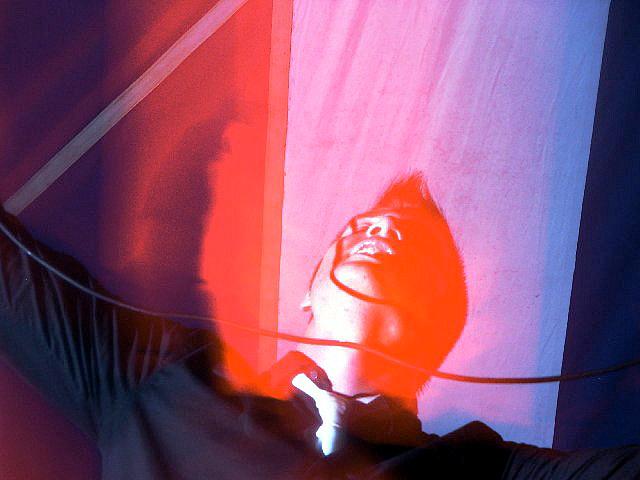
For me, the laidback side of Todd Osborn starts with the confidence to leave space between ideas, not with tempo alone. It belongs in conversations about ambient electronic and downtempo, though the most convincing moments are the ones that feel too specific to be reduced to a tag. For this kind of listening, personality matters more than purity. A track can be rough, strange or emotionally heavy and still belong in a relaxed sequence if the pacing gives it room.
What survives a quiet playback is usually the best clue to an artist's real character. The most convincing passages lean into rounded bass, blurred electronics and a careful use of silence between the moving parts. That combination gives the music enough detail to reward close listening, while still allowing it to soften the edges of a room. That gives Todd Osborn a useful depth: it can work casually, yet there is still something to inspect when headphones turn the background into foreground.
Pacing is equally important. The beat works best when it behaves like a current rather than a command. That balance between motion and patience is one of the reasons the material can sit beside much more obviously downtempo records. I would rather hear Todd Osborn hold a groove for a few extra bars than rush toward a payoff that the track does not need.
This is the kind of music I would reach for during late train journeys. It can reset the ear after something dense, but it can also stop a very soft sequence from becoming too uniform. I would not build an entire playlist from artists who behave like Todd Osborn, but that is exactly why the placement can be effective. Contrast gives the ear a fresh surface to land on.
For me, the most persuasive quality is a mood that feels spacious, nocturnal and gently hypnotic. This is where subjective listening matters. Another person may hear background, while I hear the emotional usefulness of restraint, the way a small change can carry more weight because the arrangement is not crowded. Todd Osborn can make a quiet passage feel substantial simply by refusing to overstate it, and I have a lot of time for that kind of confidence.
The interesting part is where the formula could fail. The danger with this territory is drift. Atmosphere alone is not enough, so I listen for a motif, a bass movement or a change in texture that gives the piece a memory. A chillout playlist needs contrast, and the slightly difficult moments can be the details that stop the whole thing becoming beige. If anything, I would encourage a curator to keep the stranger or heavier side of Todd Osborn in the mix. Too much smoothing-out defeats the reason the artist was interesting in the first place.
In the end, Todd Osborn works for me because the music can lower the temperature without lowering the level of attention. I like music that changes a room subtly rather than announcing a lifestyle, and this does that. It can be companionable, immersive or quietly unsettling depending on what you bring to it. If the goal is a playlist that feels relaxed without becoming anonymous, Todd Osborn can provide exactly the kind of colour that keeps the sequence human.