
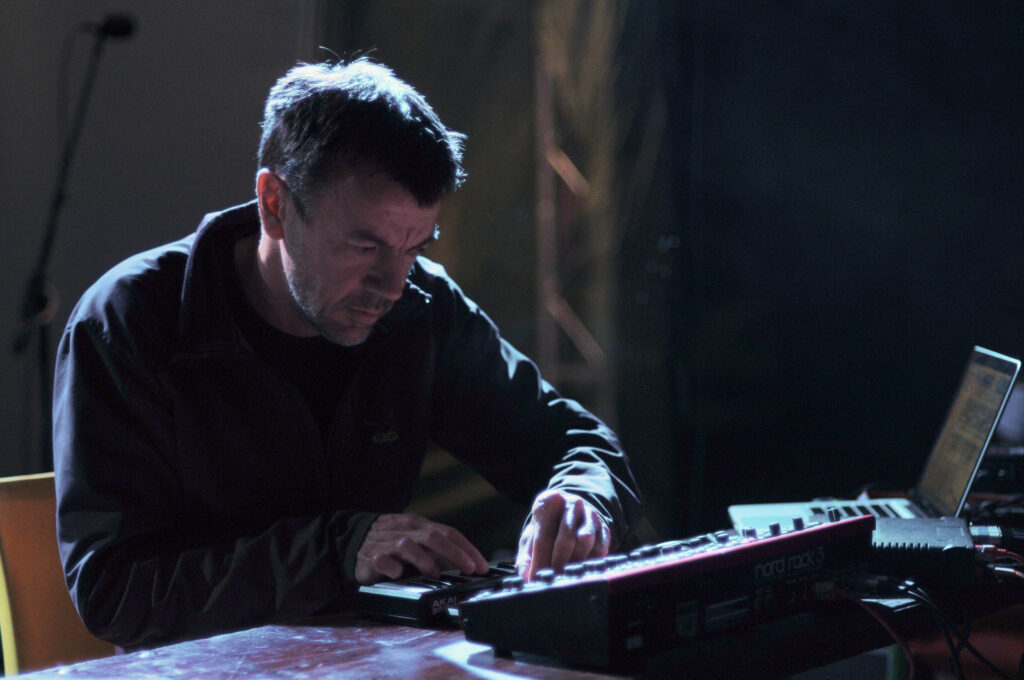
Some artists relax a room by becoming less noticeable. Biosphere is more interesting because the music can do the opposite and still feel unhurried. You can hear the connection to ambient electronic and downtempo, although the attraction is really in how the elements are balanced. I am interested in whether the music keeps its character when the volume drops, because that is where supposedly relaxing music often reveals how little is actually going on.
There is a tactile quality to the strongest material, even when the instruments themselves are synthetic. The palette often suggests glacial ambience, environmental texture and tiny shifts that reward very quiet listening. It is the sort of balance that can feel simple from a distance and increasingly deliberate as you lean in. I find myself listening past the obvious centre of Biosphere and toward the edges of the mix, because those edges usually tell you how carefully the atmosphere has been built.
Tempo alone never explains why something feels relaxed, so I pay attention to the internal pulse. The beat works best when it behaves like a current rather than a command. That balance between motion and patience is one of the reasons the material can sit beside much more obviously downtempo records. For Biosphere, that sense of time is crucial because it lets the music feel deliberate even when very little appears to be happening on the surface.
Biosphere makes the strongest case for itself when the arrangement trusts the listener enough to leave a little space unresolved.
I can imagine this working especially well during headphones during a long walk. It can reset the ear after something dense, but it can also stop a very soft sequence from becoming too uniform. That kind of contextual flexibility is one of the reasons I think Biosphere belongs in conversations about contemporary laidback listening.
That does not mean every choice lands for me. Not every passage needs to be soothing. In fact, a little tension is what keeps this kind of music alive once the novelty of the sound design has worn off. A chillout playlist needs contrast, and the slightly difficult moments can be the details that stop the whole thing becoming beige. That is the part of Biosphere I trust most: the sense that relaxation is a by-product of good pacing, not the sole objective.
The sound tends to leave me with something after-hours and lucid. I do not need chillout music to be cheerful or even comforting. In fact, a trace of melancholy or uncertainty often gives the space around the notes more meaning. The emotional pull of Biosphere comes from suggestion rather than explanation, at least in the moments I respond to most strongly.
In the end, Biosphere works for me because the music can lower the temperature without lowering the level of attention. The sound can be gentle without becoming anonymous, and atmospheric without using atmosphere as a substitute for ideas. I will always take that over music that merely signals relaxation. I would file Biosphere under music for unhurried attention, which is a much broader and more useful category than chillout alone.